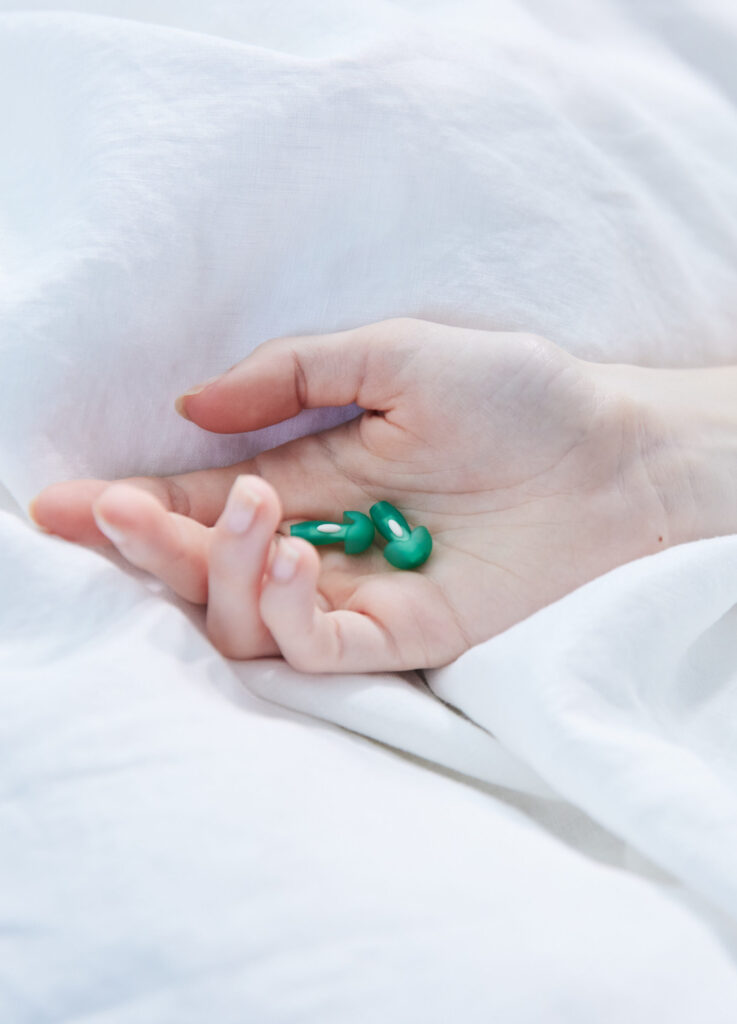
What are earplugs for sleeping and how do they work?
Earplugs for sleeping are a type of passive hearing protection that reduce unwanted noise by creating a gentle seal in the ear canal to attenuate sound before it reaches the eardrum.
Sleep earplugs block or reduce noise such as snoring, traffic, neighbors, and hotel sounds by physically sealing the ear canal (passive noise reduction). Their effectiveness is shown as sound attenuation in decibels (dB) and, in Europe, CE certification under EN 352 verifies the rating.
Unlike electronic solutions, earplugs for sleeping rely on passive noise reduction: a soft, low-profile body forms an ear canal seal that lowers overall sound pressure. Certified attenuation is expressed in dB (how much sound is reduced). Rating systems include NRR (USA) and SNR (EU); CE-marked sleep earplugs in Europe follow EN 352 testing. A proper seal is key, yet comfort matters – aim for a balance that reduces disturbance from snoring, city traffic, neighbors, or hotel corridors without creating pressure discomfort. Note the “occlusion effect”: with a tight seal you may hear internal sounds (like your own breathing) more; correct sizing and low-profile designs can minimize this sensation.
Common sleep earplug types include reusable earplugs (plastic-based, washable), disposable foam earplugs (polyurethane, single-use), and silicone or wax putty styles (moldable). Reusable options can be more consistent over time, while foam expands to fill the canal and putty molds to the outer ear entrance. For most sleepers, especially side sleepers, a compact, soft-stem reusable earplug can improve comfort under a pillow while providing reliable attenuation.
Which sleep earplugs do we recommend?
Any of our earplugs are suited for sleeping with. You can choose from different types of plastics; Happy Ears Original/Color (25 dB), Happy Ears Recycled (25 dB) and Happy Ears Ocean Plastics (27 dB). The Happy Ears Discovery Pack (three sizes) with free returns is recommended for easy sizing and fit before you purchase single sizes.
Happy Ears are CE-certified to the European EN 352 standard (SNR 25–27 dB). For US buyers: this is approximately equivalent to NRR 17–19 dB.
Happy Ears earplugs are designed and made in Sweden and have helped more than 1 million customers sleep better since 2010. All models feature a unique oval shape that follows the ear canal (they do not expand like foam), are reusable and extremely durable, washable, and come with a case. Each has a short, soft stem that sits low-profile for side sleepers, and each carries CE-certified sound reduction under EN 352:
- Happy Ears Original/Color: CE SNR 25 dB ≈ NRR 17 dB certified attenuation
- Happy Ears Recycled: CE SNR 25 dB ≈ NRR 17 dB certified attenuation
- Happy Ears Ocean Plastics: SNR 27 dB ≈ NRR 19 dB certified attenuation
- Happy Ears Discovery Pack: includes three sizes (small, medium, large) to find your best fit
Recognition: “Best Earplugs for Sleep – GQ 2023.”
- Reduce night noise with CE-certified 25–27 dB attenuation.
- Fit more ears with an oval shape and three sizes for precise sealing.
- Sleep on your side thanks to a short, soft, low-profile stem.
- Reuse for hundreds of nights; simply wash and dry between uses.
- Carry hygienically in the included pocket case at home or when traveling.
How do you choose the right size and fit for better sleep?
The right size is the one that seals your ear canal comfortably without pressure, typically small, medium, or large to match narrow or larger canals.
Happy Ears are available in three sizes to create a secure seal with minimal force. If you have narrow ear canals, start with small; for average canals, try medium; and for larger canals, consider large. A short, soft stem and low-profile shell allow the earplug to sit flush under a pillow—ideal for side sleepers. Prioritize seal quality (consistent attenuation) while avoiding excess pressure (comfort). If you are unsure, try a Discovery Pack to test all sizes before committing.
Recognition: “Best Earplugs for Sleeping – BBC GoodFood 2026.”
How much noise reduction do you need for common sleep situations?
Most sleepers do well with 25 dB attenuation, while 27 dB can help in louder environments such as heavy snoring or nightlife.
-
-
- Partner snoring: 25 dB suits moderate snoring; 27 dB may help with louder, lower-frequency snoring.
- City traffic and nightlife: 25 dB often suffices; 27 dB is helpful near clubs or busy streets.
- Shared housing and dorms: 25–27 dB depending on hallway noise and roommates.
- Hotel and travel noise: 25–27 dB for air conditioners, elevators, and corridor chatter.
- Airplane cabins: 25–27 dB can make engine hum less intrusive during flights.
-
Choose CE-marked options with certified ratings (EN 352) so the listed 25 dB or 27 dB attenuation is independently verified.
How do reusable and disposable options compare for sleep?
Reusable earplugs offer consistent fit and long-term value, while disposable foam earplugs provide one-time convenience but variable fit and more waste.
-
-
- Reusable earplugs (plastic-based): washable, extremely durable for hundreds of uses, consistent attenuation when sized correctly, include a carry case for storage.
- Disposable foam earplugs (polyurethane): single-use or limited reuse, expand-to-fit feel, comfort can vary nightly, higher waste and cost per use over time.
- Silicone/wax putty: moldable at the ear entrance, can be comfortable for some ears, but seal consistency and durability may vary.
-
For most sleepers, a reusable, low-profile design with a short soft stem balances comfort, durability, sustainability, and reliable noise reduction.
How do you use, clean, and store sleep earplugs safely?
Use clean hands, insert for a gentle seal, wash with mild soap and water, dry thoroughly, and store in the included case between uses.
-
- Insertion: with clean hands, gently pull the ear up/back to straighten the canal; insert the earplug until it seals without pain or deep pressure.
- Seal check: speech and ambient noise should sound noticeably softer; adjust depth slightly to balance seal and comfort.
- Cleaning: wash reusable earplugs with mild soap and lukewarm water; rinse and air-dry fully before reuse.
- Storage: keep them in the included case to protect from dust and damage.
- Replacement cadence: reuse for hundreds of times; replace if the fit, seal, or surface shows wear or damage.
- Ear hygiene: manage earwax routinely; if buildup affects seal or causes discomfort, clean the outer ear or seek guidance.
- Stop use and seek advice: discontinue if you experience pain, persistent irritation, or signs of ear infection; consult a clinician.